


Kitchen Remodeler projects often begin with one frustrating question: where is everything supposed to go? In a small kitchen, crowded counters, overflowing cabinets, and awkward corners can make daily cooking feel harder than it should. That problem gets worse when the room also needs better lighting, safer circulation, more prep space, and updated appliances. The good news is that a smart remodel is not only about making a kitchen look newer. It can completely change how the space works. With the right layout, custom cabinetry, vertical storage, and code-conscious planning, a small kitchen in Dingmans Ferry can feel larger, cleaner, and more efficient without adding square footage. Yes, a skilled professional can absolutely maximize storage, but the best results come from strategic design rather than simply adding more cabinets.
Why small kitchens feel full long before they are truly functional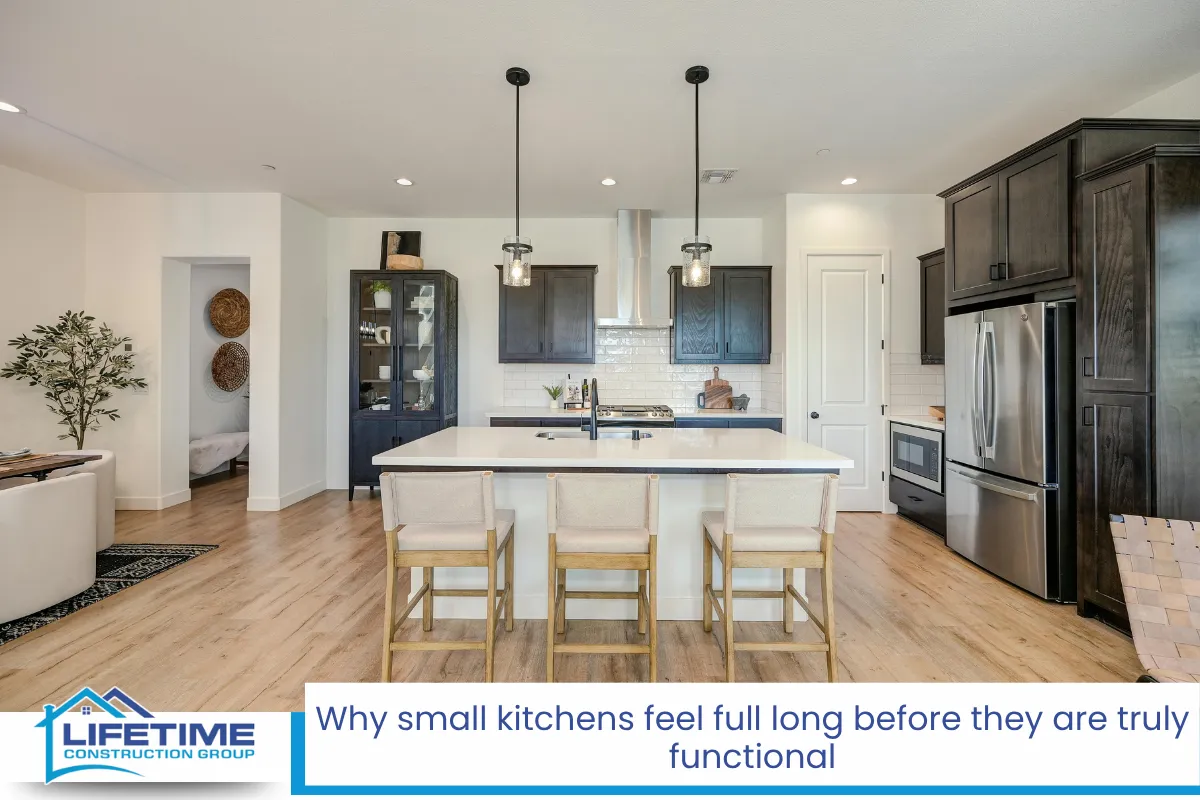
Many kitchens run out of usable storage before they run out of physical space. That sounds backward, but it happens all the time. A room may have cabinets, drawers, and shelving, yet still feel cramped because the storage is poorly planned.
Common problems include:
- blind corner cabinets that waste deep space
- short upper cabinets that stop below the ceiling
- oversized appliances squeezing the work area
- shallow drawers that do not fit cookware well
- too few zones for food prep, cleanup, and everyday access
- cluttered counters caused by a lack of appliance storage
- awkward walkways that make opening doors and drawers difficult
A strong kitchen remodeling plan solves these issues by rethinking function first. That means studying how the homeowner cooks, shops, stores dishes, uses small appliances, and moves through the room. Industry planning guidance also emphasizes keeping frequently used items within practical reach and placing enough storage near the prep and sink areas, especially in smaller kitchens.
The real answer: storage grows when the layout gets smarter
A small kitchen does not always need more square footage. It often needs a better footprint. The most successful kitchen renovation projects improve storage by changing how the room is organized.
Storage starts with workflow, not accessories
Pull-out trays, dividers, and organizers are useful, but they should come after the layout is settled. A kitchen remodeler usually looks first at the core work zones:
- food storage
- prep space
- cooking area
- cleanup area
- serving and everyday grab-and-go access
When these zones are too far apart, overlap badly, or compete for the same counter, the kitchen feels chaotic. When they are aligned properly, storage naturally improves because each item has a logical home.
Better cabinet placement beats adding random cabinetry
A tall pantry at the right end of the room may store more than several mismatched wall cabinets. Deep drawers can outperform lower cabinets with shelves because they let you pull contents out instead of reaching into dark corners. A narrow pull-out beside a range or refrigerator can turn a few wasted inches into a practical spice, oil, or tray station. Design guidance for small kitchens specifically highlights pull-out pantry units, storage devices in corner cabinets, and locating useful storage close to the sink and prep areas.
Ceiling-height cabinetry changes the storage equation
One of the fastest ways to improve kitchen improvement results in a compact room is to use the full wall height. Standard upper cabinets often leave a dust-collecting gap at the top. In a smaller home, that gap is lost opportunity.
What full-height cabinets do well
Full-height cabinetry can help you:
- store seasonal cookware and serving pieces overhead
- reduce visual clutter by hiding less-used items
- create a more built-in, intentional appearance
- make the room feel taller when designed correctly
That does not mean every cabinet should be stuffed to the ceiling with daily-use items. Best practice is to keep frequently used items within a comfortable reach range and reserve higher storage for occasional use. Planning guidance recommends placing often-used storage roughly 15 to 48 inches above the floor when possible.
When glass fronts and open shelving help
In a small kitchen remodel, solid cabinets from floor to ceiling can sometimes look heavy. A skilled kitchen remodeling contractor may balance that with a few glass-front doors, light finishes, or selective open shelving. Open shelving should be intentional, not excessive. It works best for neat, everyday items and can visually lighten the room when upper cabinetry would otherwise feel bulky.
Drawers usually outperform doors in a tight kitchen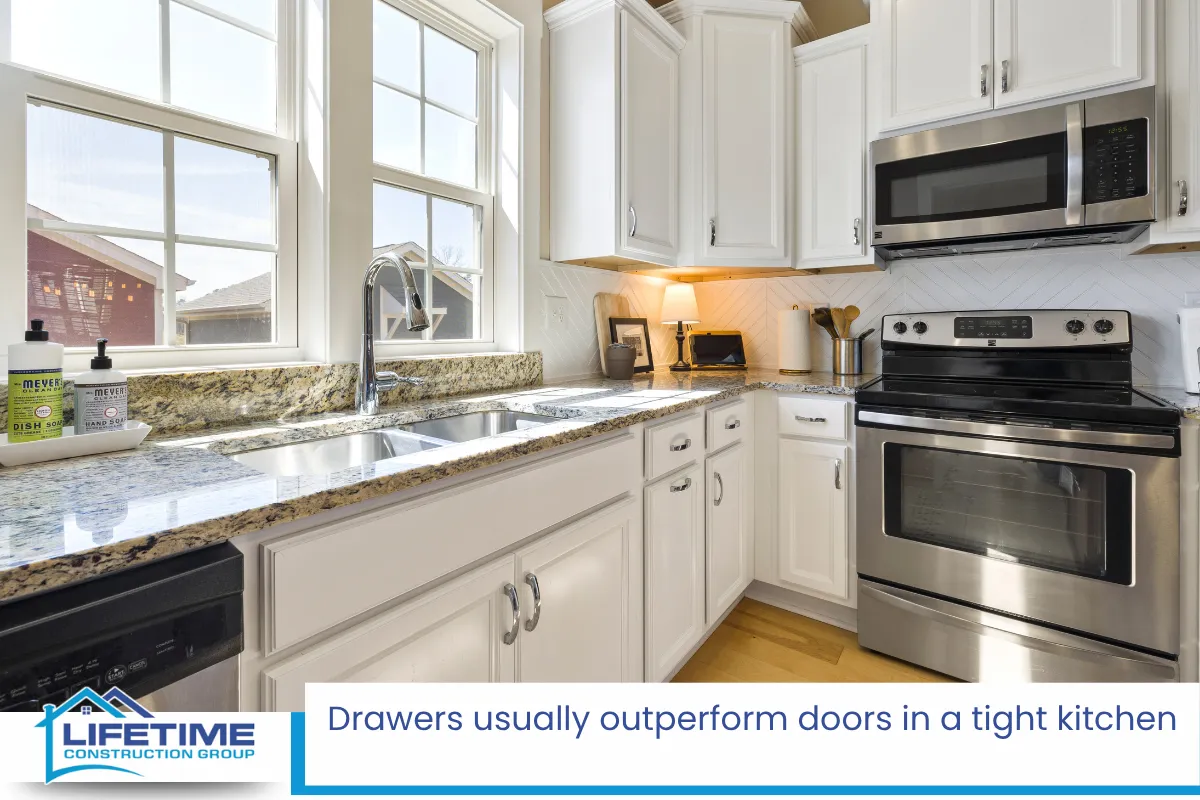
Homeowners often assume traditional base cabinets are enough. In reality, drawers are one of the biggest upgrades for efficient storage.
Why drawers win
Deep drawers improve access for:
- pots and pans
- mixing bowls
- food containers
- dishes
- cutting boards
- small appliances
Instead of kneeling and digging through stacked items, you pull the contents toward you. Storage-focused design recommendations also note that heavy-duty drawer systems are especially effective for cookware and that internal dividers can be tailored to the items being stored.
Smart drawer upgrades worth considering
A kitchen remodel can include:
- peg systems for plates and bowls
- utensil inserts sized to actual drawers
- vertical slots for baking sheets and trays
- hidden charging drawers
- drawer-within-drawer systems for flatware and linens
These details seem small on paper, but together they reduce clutter and make the kitchen easier to maintain.
Corners, toe-kicks, and end panels are hidden storage opportunities
Small-space storage is often won in places most people ignore.
Corners should work harder
Corner cabinetry does not have to become a black hole. A kitchen remodeler may use lazy Susans, swing-out shelves, or corner drawers so that the full cabinet volume becomes usable. Planning guidance specifically recommends including a functional storage device in at least one corner cabinet when corner cabinets exist.
Toe-kick drawers are useful in the right kitchen
The recessed space below base cabinets can sometimes hold slim drawers for placemats, trays, linens, or pet items. They are not right for every design, but in a compact kitchen they can add surprising capacity without taking visual space.
End panels can hold vertical storage
The exposed side of an island or cabinet run can become a home for:
- tray storage
- cookbook shelving
- towel bars
- narrow spice racks
- charging stations
These are the details that separate a generic kitchen renovation from a highly functional one.
Appliance choices can free up far more room than expected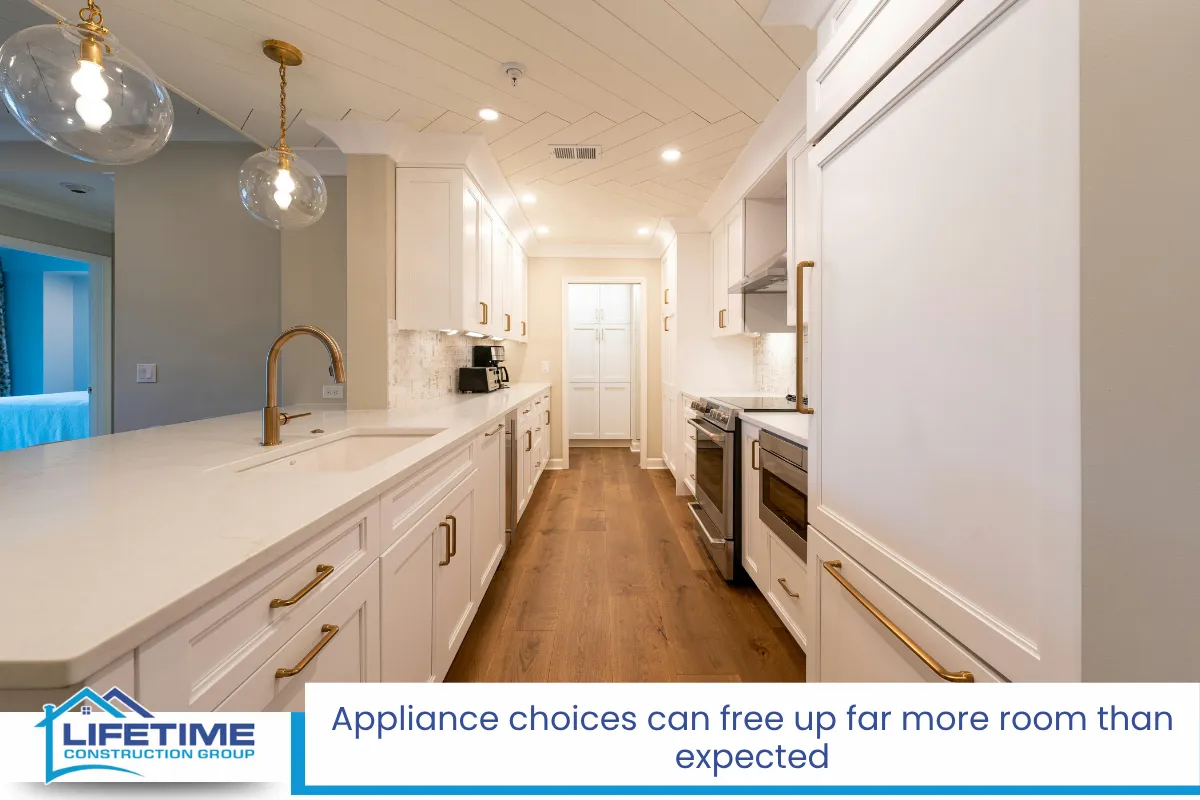
Storage is not only about cabinets. Appliance size and placement can either support the room or overwhelm it.
Scale matters in a small kitchen
Oversized refrigerators, bulky hoods, and poorly placed microwaves can steal precious wall and counter space. Design guidance for microwaves, landing areas, and circulation exists for good reason: appliances affect safety, reach, and workflow as much as appearance.
A thoughtful kitchen remodeling plan may include:
- a counter-depth refrigerator
- a microwave drawer or built-in niche
- a slimmer range profile
- a more compact dishwasher where appropriate
- an island with concealed appliance storage
Appliance garages still have value
Appliance garages are making a practical comeback, especially for coffee equipment, toasters, and blenders. In a small kitchen remodel, they help keep counters open without forcing homeowners to lift heavy items in and out of distant storage.
Efficiency belongs in the conversation too
If appliances are being replaced, many homeowners also look at ENERGY STAR certified options. These products meet energy-efficiency specifications and may help reduce long-term utility costs.
Read Better Flow: Can a Kitchen Remodeler in Dingmans Ferry, PA Improve Your Layout?
Light, color, and sightlines make storage feel bigger
A kitchen can gain actual storage and still feel tight if the design is visually heavy. That is why kitchen improvement should combine storage planning with visual openness.
Design choices that help a small kitchen breathe
Lighter cabinet finishes, reflective surfaces, under-cabinet lighting, and a simpler material palette can make the room feel more open. Good lighting matters for function too. The U.S. Department of Energy notes that switching to LED lighting can reduce energy use, and lighting makes up a meaningful share of home electricity consumption.
Useful lighting layers include:
- ambient ceiling lighting
- under-cabinet task lighting
- accent lighting in glass cabinets or shelving
- natural light preservation where possible
Why this matters for storage
When a kitchen is brighter, items are easier to find, deep cabinets feel more usable, and the room appears less crowded. That supports the entire remodeling goal: not just storing more, but using the space better.
Islands, peninsulas, and seating need a storage job
In some small kitchens, an island is a mistake. In others, it is the best storage move in the room. The key is scale and clearance.
A compact island or peninsula can hold:
- deep drawers for cookware
- pull-out trash and recycling
- open shelves for everyday dishes
- hidden outlets and charging space
- seating with storage underneath
Storage-focused design examples also highlight islands as good places for cabinets, large drawers, and pull-out bins when the footprint allows safe circulation.
A kitchen remodeler should never force an island into a room that cannot support it. In a narrow kitchen, a peninsula or improved wall cabinetry may deliver better results.
What is usually worth keeping, moving, or removing
Every kitchen renovation benefits from deciding what deserves prime real estate.
Keep close at hand
Daily dishes, utensils, cutting boards, pans, coffee supplies, lunch containers, and trash access should live near the zones where they are used.
Move higher or farther away
Holiday platters, specialty bakeware, bulk serving pieces, and infrequently used gadgets can move to taller cabinets or less convenient spaces.
Remove from the kitchen entirely
Some kitchens feel too small because they are storing non-kitchen items: mail, tools, pet supplies, paperwork, medicine, or overflow pantry stock. A kitchen remodel should define boundaries, not just add compartments.
Permits, inspections, and Pennsylvania rules homeowners should know
For homeowners in Dingmans Ferry, storage upgrades can be simple or highly technical depending on the project scope. Cosmetic changes such as paint, hardware, or similar finish work are different from a remodel that alters electrical, plumbing, gas, mechanical systems, walls, or major cabinetry layouts.
Pennsylvania’s Uniform Construction Code applies statewide, and the Commonwealth states that property owners generally must obtain a construction or building permit before starting work that changes residential buildings or electrical, gas, mechanical, or plumbing systems. Inspections are also required in many cases. Pennsylvania also notes that most municipalities enforce the code locally or through certified third-party agencies.
For properties in Dingmans Ferry, homeowners commonly deal with local municipal administration through Delaware Township, which identifies its building department process and inspection contact information publicly.
Practical rule of thumb
A permit question should come up early if your kitchen remodeling project includes:
- moving plumbing lines
- adding or relocating outlets
- changing lighting circuits
- modifying ventilation or gas lines
- removing or altering walls
- changing windows or doors
- expanding the footprint
Contractor compliance matters too
Pennsylvania also requires most home improvement contractors performing at least $5,000 of home improvements per year to register with the Attorney General’s Office, and the law requires compliant written contracts for projects over $500.
That matters because a good kitchen remodeling contractor is not only designing storage. They should also understand when permits, inspections, contract terms, and insurance requirements need attention.
How to tell whether your small kitchen needs a remodel or a lighter refresh
Not every kitchen needs full demolition. Some homeowners can gain better storage with a targeted update. Others need a more complete kitchen remodel.
A lighter refresh may work if the layout is basically sound and the main problems are clutter, poor drawer organization, old cabinet interiors, or weak lighting.
A larger kitchen renovation may be the better path if:
- the room lacks enough prep space
- traffic flow is constantly blocked
- appliances are the wrong size
- cabinets are damaged or inefficient
- electrical capacity is outdated
- the sink, range, and refrigerator arrangement fights daily use
The key is honesty. Organization tools cannot fix a poor layout forever.
What a successful small-kitchen result looks like
The best kitchen renovation does not just give you more compartments. It makes the room feel calmer.
A successful result usually means:
- clear counters
- shorter walking distances
- more accessible cookware and dishes
- fewer duplicate gadgets
- better visibility inside drawers and cabinets
- stronger lighting
- safer, smoother movement through the room
- storage that matches real habits, not showroom photos
That is why the answer to the title’s question is yes. A kitchen remodeler in Dingmans Ferry, PA can absolutely maximize your storage. But the biggest gains come from design decisions that blend layout, cabinetry, appliances, code compliance, and day-to-day practicality into one plan.
When every inch starts working for you
A small kitchen should not force you to choose between beauty and function. With the right kitchen improvement strategy, even a compact room can hold more, look cleaner, and support the way your household actually lives. Vertical cabinets, drawer-based storage, corner solutions, better lighting, efficient appliances, and thoughtful zoning can dramatically improve a small space without making it feel crowded. The smartest kitchen remodel is not the one with the most features. It is the one that solves the most problems. In Dingmans Ferry, homeowners who plan carefully, verify local requirements, and work with a qualified professional can turn a cramped kitchen into one of the most useful spaces in the home.
Kitchen Remodeler in Dingmans Ferry, PA – Lifetime Construction Group LLC
At Lifetime Construction Group LLC, we help homeowners make small kitchens work harder without sacrificing style. As your Kitchen Remodeler in Dingmans Ferry, PA, we focus on smart kitchen remodeling solutions that improve storage, workflow, lighting, and everyday comfort. We design kitchens with practical cabinetry, efficient layouts, and detail-driven finishes that fit how your family really uses the space. Whether you need a full kitchen renovation or a targeted kitchen improvement plan, we are ready to help you move forward with confidence. We proudly serve Dingmans Ferry, Pennsylvania and the surrounding areas. Call us at (570) 517-6557 or fill out our contact form to schedule your consultation and start building a kitchen remodel that gives you more function, more storage, and better use of every inch.
Frequently Asked Questions
1. How long does a small kitchen remodel usually take in Dingmans Ferry, PA?
A small kitchen remodel can move faster than a large renovation, but the timeline still depends on scope, materials, permits, and inspections. A basic project with no layout changes may take a few weeks, while a full remodel involving cabinetry, counters, electrical, plumbing, and finishing work can take longer. Custom cabinets, specialty countertops, and backordered fixtures can also affect the schedule. In Dingmans Ferry, timing should also account for municipal approvals and inspection coordination when required. The best way to avoid delays is to finalize selections early, confirm the project scope clearly, and work from a detailed schedule before demolition begins.
2. Is it better to reface cabinets or replace them in a small kitchen?
Cabinet refacing can make sense when the cabinet boxes are in good shape, the layout already works, and the main goal is appearance. It is usually less disruptive than full replacement. However, replacing cabinets is often the better choice when you need more storage, deeper drawers, taller uppers, better organization, or a new floor plan. In a small kitchen, function matters as much as finish. If your current cabinets waste space or lack useful drawer systems, refacing may leave the biggest storage problems unsolved. A professional review can help determine whether your kitchen needs a cosmetic update or a more effective redesign.
3. Will a small kitchen remodel increase home value?
A well-planned kitchen remodel can improve appeal, function, and marketability, especially when the existing kitchen feels dated, cramped, or inefficient. Buyers often notice storage, cabinet condition, lighting, countertop space, and appliance placement right away. That said, value is not only about resale math. A remodel can also add daily quality of life through easier cooking, better organization, and less visual clutter. The strongest return usually comes from balanced improvements rather than overbuilding for the neighborhood. Durable materials, timeless finishes, efficient storage, and code-compliant work tend to support both homeowner enjoyment and long-term property value more effectively than trend-heavy upgrades.
4. Can I live in my home during a kitchen renovation?
In many cases, yes, but it takes planning. Homeowners often set up a temporary kitchen in another room with a microwave, coffee maker, small refrigerator, and basic meal prep supplies. The larger question is comfort. Dust, noise, limited sink access, delivery traffic, and interruptions to water or power can make daily life inconvenient. Families with young children, pets, or work-from-home schedules may feel the disruption more strongly. If the remodel includes major demolition or utility changes, some households choose short-term arrangements elsewhere during the most intense phase. Clear communication with your contractor helps you understand what to expect before work begins.
5. What should I do before meeting with a kitchen remodeler?
Start by paying attention to your routine for at least a week. Notice which drawers frustrate you, where clutter collects, what appliances stay on the counter, and which items you use every day. Measure your kitchen if you can, take photos, and make a list of must-haves versus nice-to-haves. It also helps to set a realistic investment range and gather inspiration images that reflect function, not just style. Think about whether you need more pantry space, better prep room, easier cleanup flow, or updated lighting. The more specific you are about daily problems, the easier it is to design a kitchen that solves them.
Disclaimer: This article is for general informational purposes only and is not legal, code, or permit advice. Always confirm current project requirements with local officials and qualified professionals before starting a kitchen remodel.