

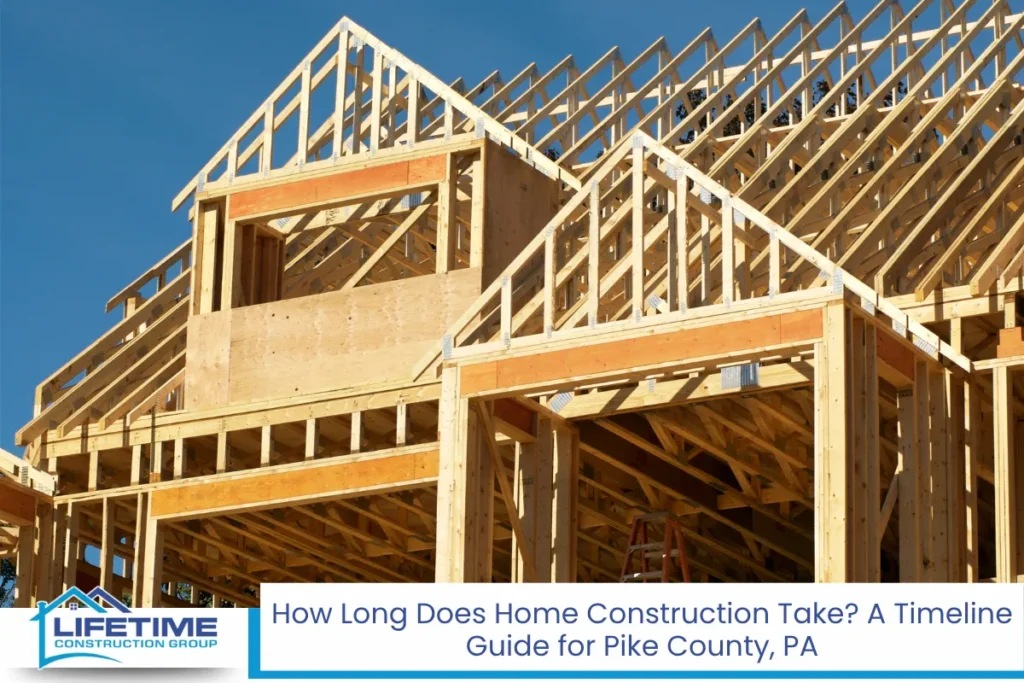
Home construction is one of the biggest commitments a family can make, and one of the first questions that comes to mind is how long it will actually take. If you are planning to build in Pike County, Pennsylvania, the answer is not always straightforward. Between wooded lots, rocky soil, seasonal weather, and local permitting requirements, timelines here look different than they do in suburban developments closer to metro areas. That uncertainty can feel overwhelming, especially when you are trying to coordinate financing, leases, or the sale of a current home. The good news is that a clear, phase-by-phase plan removes most of the guesswork. This guide breaks down every stage so you can move forward with confidence and realistic expectations.
Key Takeaways
- Custom-built homes generally require 10 to 16 months to complete in Pike County, from initial planning through move-in. A typical custom home construction project in Pike County, PA takes 9 to 18 months depending on complexity, lot conditions, and scope of finishes.
- The physical construction phase of home building takes about 6 to 12 months, while the design, permitting, and financing work that happens before groundbreaking adds several months that homeowners often underestimate.
- Home construction timelines in Pike County depend heavily on local municipal approvals, Pennsylvania Uniform Construction Code reviews, and township-level zoning and inspection schedules.
- Modular homes are built in sections off-site and assembled on-site, which can shorten the framing and shell phase considerably, but foundation work, permitting, and inspections still follow the same schedule as site-built homes.
- Working with an experienced general contractor who knows Pike County municipalities, suppliers, and inspection cycles helps keep the construction timeline realistic and reduces avoidable delays.
Planning Your Pike County Home Construction Timeline From Day One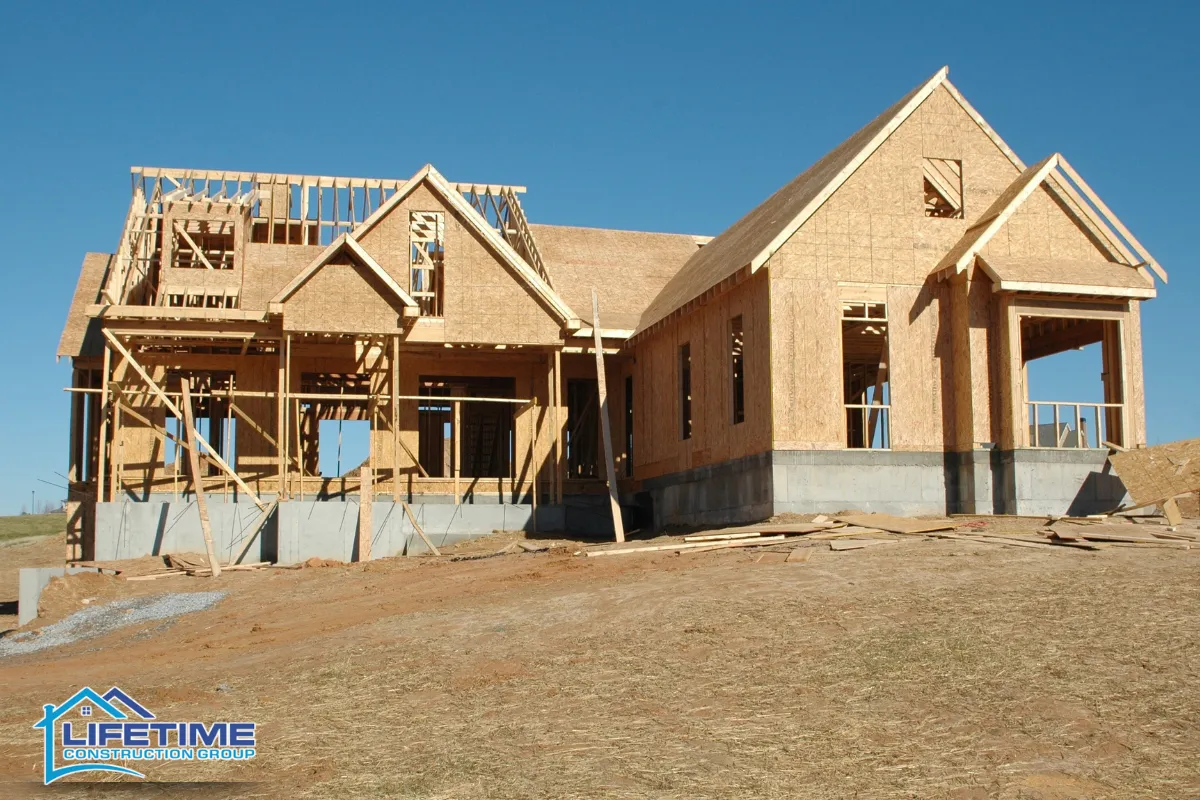
Building a home in Pike County typically takes 10 to 16 months from first design consultation to move-in day. That number surprises many people, especially those who have heard that average home construction takes about seven months nationally. Building homes in northeastern Pennsylvania averages longer timelines compared to other regions because of terrain, climate, and the fact that many houses in Pike County rely on individual wells and septic systems rather than municipal utilities.
Think of the journey in three main phases:
- Pre-construction (design, permits, financing): roughly 3 to 6 months
- Active construction (site work through interior finishes): roughly 6 to 10 months
- Final inspections and move-in preparation: about 4 to 6 weeks
As a practical example, if you start the design process in January, you might break ground in late spring or early summer and move into your dream home the following spring. That kind of planning allows you to work through permitting during colder months and take full advantage of the warmer building season.
Early decisions shape the entire schedule. Choosing between stick frame construction, which allows maximum flexibility in design, and alternative construction methods like Insulated Concrete Forms, which speed up construction times significantly, affects how long the structural phase takes. Similarly, the level of customization, square footage, foundation type, and finish quality all play a role. Traditional wood framed homes can be completed in about nine months, while production homes can often be completed in four to six months. Custom builds with high-end finishes and complex floor plans sit at the longer end of the spectrum.
A licensed general contractor who understands Pike County municipalities like Dingman Township, Delaware Township, and Lehman Township can navigate specific permitting schedules, coordinate inspections, and keep your project on track from day one.
Pre-Construction in Pike County: Design, Budgeting, and Permits (3–6 Months)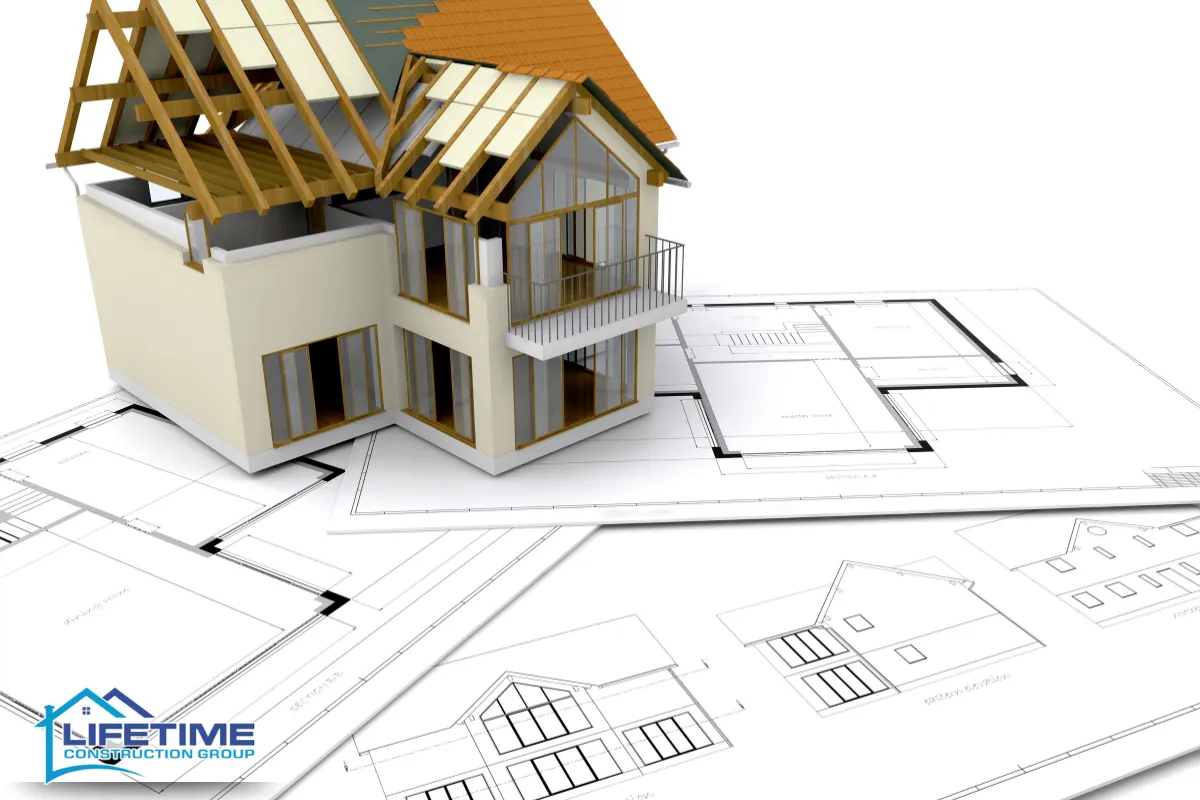
This phase happens before any excavation equipment arrives. It is where most hidden time is spent, and where careful attention to detail pays the biggest dividends. The pre-construction phase typically lasts 2 to 4 months at a minimum, but in Pike County it often stretches to 3 to 6 months because of the additional site evaluations rural lots require. Pre-construction stages can extend the overall timeline to about one year when land acquisition, lengthy zoning reviews, or financing complications are involved.
Start by confirming that your land is buildable. That means checking Pike County tax parcel data, verifying road access and setback requirements, assessing slopes, and identifying nearby wetlands or floodplains. Any of these factors can influence the design, cost, and schedule of your project.
Septic suitability is a major step. Soil percolation tests are often required in Pike County for septic system approval. A licensed soil scientist performs the evaluation, and the sewage enforcement officer reviews the application. Under Pennsylvania code, a conventional septic permit decision must come within 7 days of a complete application, but scheduling the soil test itself and assembling a complete submission can add 2 to 6 weeks to your timeline.
Working with a home contractor or design professional during this stage means finalizing floor plans, elevations, structural layout, and energy efficiency decisions such as insulation levels, window specs, and HVAC type. These choices directly influence later inspections and material lead times, so locking them in early is one of the most effective ways to keep the schedule moving.
Assembling a realistic budget and securing construction-to-permanent financing adds its own milestones. Lender appraisals, draw schedules, and pre-closing inspections typically add 30 to 60 days before you can close and begin building.
Permitting processes can take 1 to 3 months depending on local municipalities. In Pike County, you will likely need zoning approval, a driveway permit from the township or PennDOT, a well permit, a septic permit, and a building permit application that meets the Pennsylvania Uniform Construction Code. Municipalities in Pennsylvania can take up to 15 business days to review building permit applications when plans are submitted with professional certification. Without it, the review window extends to 30 business days.
Before submitting applications, have these documents ready:
- Boundary and topographic survey
- Soil and percolation test results
- Architectural plans sealed by a design professional
- Proof of homeowner’s insurance
- Stormwater or erosion and sediment control plan, if required by the Pike County Conservation District
Site Preparation, Foundation, and Structural Shell (2–3 Months)
Once permits are in hand, site preparation begins. This stage is heavily influenced by Pike County’s wooded lots, ledge rock, and seasonal weather patterns. Heavy winter snow and freezing temperatures can delay construction timelines in Pike County, so many builders prefer to break ground between late April and early October when conditions are most favorable.
Site preparation usually takes about 1 to 3 weeks and includes clearing trees and brush, rough grading, installing a temporary construction entrance, placing erosion and sediment control measures that comply with Pike County Conservation District requirements, and staking the house footprint. Difficult terrain can add time to the site preparation phase, especially when rock removal or blasting is needed.
Laying the foundation takes 1 to 4 weeks. A more precise range for excavation, forming, pouring, and curing concrete footings and basement walls is 2 to 4 weeks, though groundwater management or rock removal can push it longer. The foundation phase typically lasts 2 to 4 weeks under normal conditions.
Underground utilities are scheduled around the same time. Trenching and installing water lines, well piping, septic lines, and sometimes propane lines or conduits for a future detached garage often overlap with backfilling and slab preparation.
Framing typically takes 2 to 6 weeks for the full scope, and more specifically, framing typically takes 3 to 5 weeks in home construction for a mid-sized single-family home of about 1,800 to 2,400 square feet. This includes walls, roof trusses, sheathing, housewrap, and window installation. Stick frame construction remains the most common method in this area because it provides the most flexibility in design and fits the varied terrain of Pike County lots.
Modular homes can compress the framing and shell phase dramatically. Because modules arrive pre-built from a factory, crane day, setting, and stitching the sections together typically take only a few days. However, the same foundation schedule, site preparation, and inspections still apply.
Typical inspection points during this stage under Pennsylvania code include:
- Footing inspection before pouring concrete
- Foundation wall inspection
- Framing inspection (structural members, nailing patterns, sheathing)
- Sheathing and moisture barrier verification
Each inspection must be scheduled and passed before the next step proceeds, and wait times of several days between stages are normal.
Read What Is the Average Cost to Build a House? A Guide to Home Construction in Pike County, PA
Mechanical Systems, Insulation, and Interior Finishes (3–5 Months)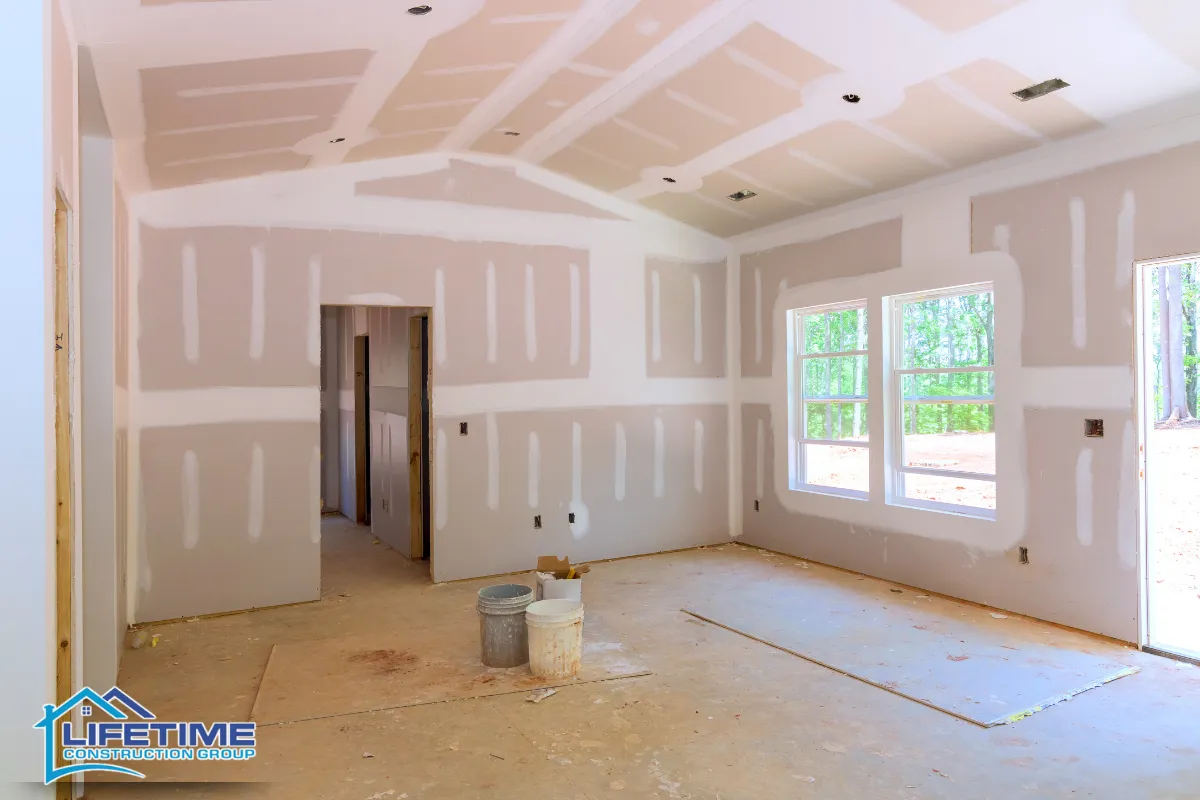
This is the longest phase of home construction, where the house transforms from an empty shell into a livable space. It requires careful coordination by the construction company managing the project because many different trades must work in sequence.
Rough-in work for electrical, plumbing, and HVAC systems takes about 2 to 4 weeks for a mid-sized home. Installing major systems can take about 1 to 2 months when you factor in scheduling, inspections, and any corrections. Each system must pass inspection before insulation can go in and walls can be closed, following Pennsylvania Uniform Construction Code standards.
Insulation and air sealing come next. Homeowners choose between fiberglass batts, blown-in cellulose, spray foam, or ICF-style wall systems based on personal preferences, budget, and energy efficiency goals. Inspection and blower-door testing timelines can add days to the schedule if corrections are needed.
Hanging and finishing drywall typically takes 2 to 3 weeks, including taping, sanding, and priming. In Pike County winters, indoor conditions may require temporary heat and dehumidifiers to maintain proper curing temperatures, which adds a small but real cost and scheduling consideration.
Interior finishes can take 1 to 2 months and follow a general sequence:
- Flooring installation
- Interior doors and trim
- Cabinetry and countertop installation
- Painting
- Tile showers and backsplashes
- Plumbing and electrical fixtures
- Final hardware and accessories
Specialty trades like tile setters, stone fabricators, and custom cabinetmakers sometimes book out weeks in advance, so securing these subcontractors early is critical. The style and complexity of your finishes directly affects how long this stage runs.
Exterior finishes take approximately 1 to 2 months and are worked on in parallel with interior tasks where weather allows. Siding installation, roofing completion, exterior trim, decks and porches, and driveway base coats all fall into this window. Seasonal weather changes significantly affect construction schedules in Pike County, and prolonged wet periods or early snow can push exterior work into spring.
Homeowner decision points that frequently cause delays include:
- Tile selections and layout approval
- Paint colors for interior and exterior
- Lighting and fixture packages
- Countertop material and edge profiles
- Flooring type and stain color
If any of these are delayed, the ripple effect can push the schedule by several weeks. Making these selections before the rough-in stage keeps the project moving without gaps.
Final Inspections, Punch List, and Move-In Timing (4–6 Weeks)
This is the wrap-up phase where the general contractor, local code officials, and homeowner collaborate to get the home ready for occupancy in compliance with Pike County and Pennsylvania regulations.
The typical final inspection sequence includes:
- Electrical final
- Plumbing final
- HVAC final
- Energy code verification, including insulation documentation
- Final building inspection
Once all inspections pass, the township or borough issues a Certificate of Occupancy. Without this document, you cannot legally move in.
A punch list is a detailed list of minor corrections and touch-ups identified during a walkthrough. Schedule this walkthrough with your builder 1 to 2 weeks before expected completion. Walk through every room calmly and systematically, noting items like paint touch-ups, hardware adjustments, grout repairs, and trim alignment.
Exterior completion tasks during this phase include final grading, seeding or basic landscaping, final driveway paving or gravel application, and any site drainage adjustments required by Pike County Conservation District approvals. Weather can still influence your actual move-in date during this step.
Plan utilities transfers, internet installation, and moving company reservations 3 to 4 weeks in advance, coordinated with your general contractor’s target completion date and the expected Certificate of Occupancy issuance.
With realistic expectations and clear communication, most Pike County families move in within days of final approvals. The last few weeks can feel long, but they are the final step of a well-managed investment in your future lifestyle.
What Can Speed Up or Slow Down Your Pike County Construction Timeline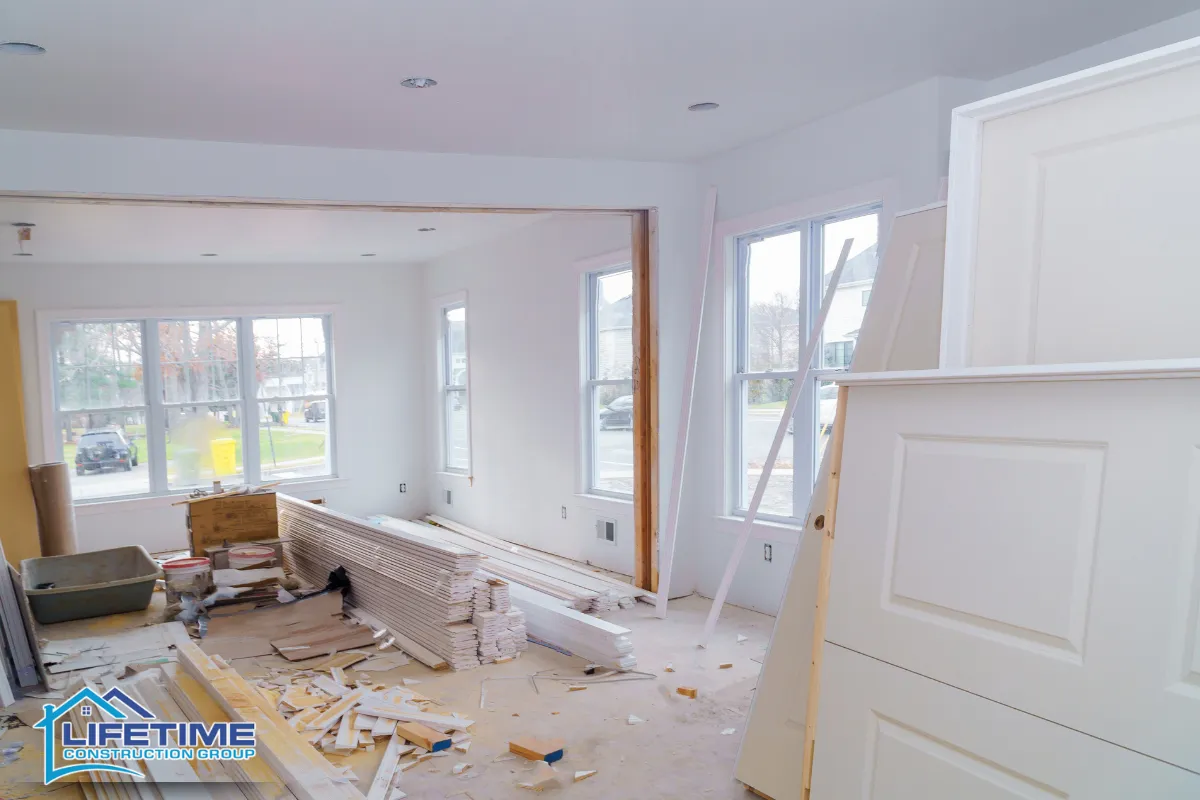
Even with a solid construction timeline, local conditions and personal choices can significantly change how long the project actually takes. Understanding these factors before you start helps you plan with the right mind set.
Homeowner-controlled factors that slow projects down:
- Frequent design changes after framing begins
- Late material selections for cabinets, windows, or special-order finishes
- Adding major features midstream like a finished basement or expanded deck
- Having multiple decision-makers without a clear point of contact
Pike County-specific external factors also play a role. Winter storms, spring thaw mud, local supplier inventories, and inspection backlogs during busy building seasons can each add days or weeks. Subcontractor availability can influence home construction timelines in rural areas where the pool of skilled trades is smaller than in metro regions. Owner-built homes typically take about 12 months to complete, partly because coordinating subcontractors without a dedicated project manager creates gaps in the schedule.
One of the advantages of working with an experienced custom home builder versus managing many separate subcontractors is better scheduling, established supplier relationships, and familiarity with township officials. A dedicated team that has built in the area before knows which inspectors are available on which days and which material yards can deliver on short notice.
When comparing modular homes to fully site-built homes in terms of schedule reliability, factory construction protects work from weather, but transport logistics, crane scheduling, and site readiness still need precise coordination.
Practical strategies to keep the schedule on track:
- Approve drawings early and avoid revisions after permit submission
- Finalize all selections before rough-in begins
- Maintain one primary decision-maker in the household
- Build contingency time of 5 to 20 percent into your target move-in date
As a concrete example, a two-week delay waiting for special-order windows can push siding, trim, and painting back by a similar amount, which then affects final inspections. That single late decision can move your move-in date by a month. The craftsmanship and durability of a well-built home reflects the planning that goes into it, so the effort you put into the front end pays off in a smoother, more predictable build.
Home Construction in Pike County, PA – Lifetime Construction Group LLC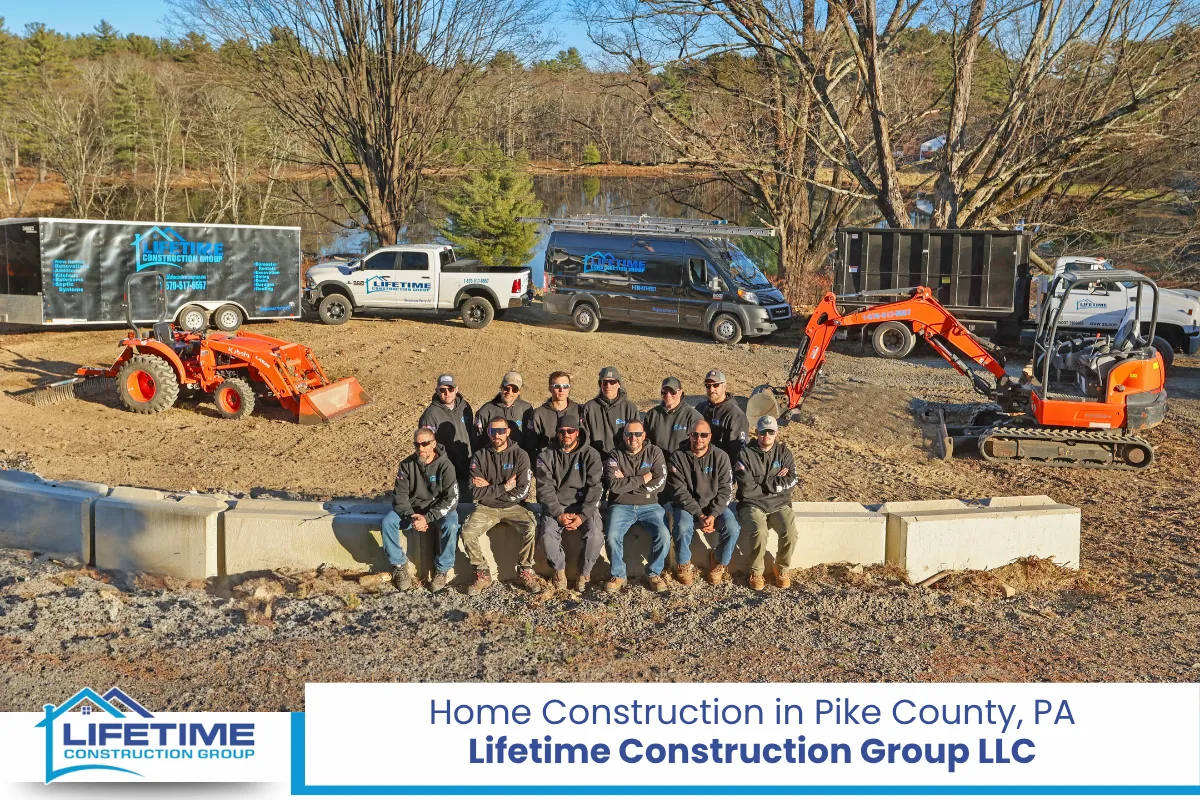
At Lifetime Construction Group LLC, we are committed to providing homeowners across Pike County with a building experience that fits their vision, budget, and timeline. Based in Dingmans Ferry, Pennsylvania, we specialize in home construction, home remodeling, and home renovation projects of every size, from custom new builds to major additions and complete home improvement transformations. Our team walks you through every step of the process, from initial planning and permitting through site preparation, framing, finishes, and final inspections.
We know Pike County because we build here every day. Our familiarity with local zoning requirements, Pennsylvania building codes, inspection schedules, and area suppliers helps us reduce delays and keep your project stays on a clear, predictable path. Whether you are looking for a general contractor to manage a full custom build or a construction company to handle a complex renovation, we bring the innovative approach and local knowledge your project deserves. Call us at (570) 517-6557 or fill out our contact form to start turning your dream home into reality on a schedule that works for your life.
Frequently Asked Questions
How Far in Advance Should I Start Planning My Pike County Home Build?
Most families should begin the planning process at least 14 to 18 months before their desired move-in date. This allows time for land evaluation, financing, architectural design, and the permitting journey without feeling rushed. If you are purchasing land that has not yet been surveyed or tested for septic suitability, add another 2 to 3 months. Starting early also gives you the flexibility to select a builder during a less busy period, secure favorable material pricing, and avoid the pressure of making rushed decisions on finishes and layout. Early planning is especially valued when building in a rural area where site evaluations depend on seasonal ground conditions and scheduling availability.
Do Pike County Seasonal Rentals or Temporary Housing Options Affect When I Should Schedule My Build?
Pike County’s tourism-driven rental market means that short-term housing options are more expensive and harder to find during summer and fall. If your current lease ends in June and your new home will not be complete until the following spring, you may face several months of high rental costs during peak season. Many homeowners plan their builds so that the most weather-sensitive construction phases happen in summer and fall, aiming for a late winter or early spring move-in when temporary housing is more affordable and available. Coordinating your build start date with local rental cycles can save thousands of dollars and reduce stress during the transition.
Can I Live On-Site in an RV During Construction in Pike County, PA?
Zoning rules on this topic vary by township in Pike County. Some municipalities allow temporary RV occupancy on a lot during active construction with conditions, such as a time limit (often 6 to 12 months), proof of an active building permit, and a temporary utility hookup for water and electric. Other townships prohibit it entirely. Before making this commitment, contact your local zoning officer to confirm what is allowed on your specific parcel. You will also need to consider sanitary facilities, as connecting an RV to a septic system under construction may not be permitted until the system passes its final inspection.
How Does Finishing a Basement Later Change the Original Construction Timeline?
If you plan to finish your basement in the future rather than during the initial build, your general contractor should still rough in electrical wiring, plumbing drains, and HVAC ductwork during the main construction phase. This rough-in work adds only a few days to the active build but saves significant time and money when you eventually complete the space. Skipping the rough-in means cutting into finished walls, floors, and ceilings later, which is more disruptive and expensive. The main build timeline shortens by roughly 3 to 5 weeks when you defer basement finishes, allowing you to focus your budget on the living areas you need immediately.
What Happens If Material Prices Change During My Project?
Most construction contracts in Pike County include allowances for specific categories like countertops, flooring, and lighting. If the actual cost of a selected material exceeds the allowance, the homeowner pays the difference. For broader price swings driven by market conditions, some contracts include escalation clauses that define how cost increases are shared. Building in a contingency of 5 to 10 percent above your total budget protects you from surprises without derailing the schedule. Open communication with your builder about pricing changes as they arise ensures that substitutions or adjustments can be made quickly, keeping the project moving forward rather than stalling while waiting for costs to stabilize.
Disclaimer: This article provides general information about home construction timelines in Pike County, PA and does not constitute legal, financial, or engineering advice. Timelines, regulations, and costs may vary based on your specific site conditions, municipality, and project scope. Always consult licensed professionals for decisions related to your build.
Read Understanding Interior Finishes in Home Construction for Your Build in Dingmans Ferry, PA